
Much of the research on nature and health has a focus on urban communities. The ‘nature of nature’ and how people interact with and gain benefit from it is clearly different in more rural settings, and the research needs to consider this. We’ve previously carried out some studies with a rural focus, such as our ‘Dorset Green Health’ project in collaboration with Dorset / Bournemouth, Christchurch & Poole Councils, or an earlier study considering how different types of nature in rural contexts are associated with population health.
It’s clear that health research in rural areas needs to consider how rural health is shaped by a complex array of interacting characteristics of individuals, communities, their natural, built, and socio-economic environments, access to services and beyond.
In June 2026, Dr Sam Trethewey, a public health doctor and PhD student here at the University of Exeter, brought together researchers, clinicians, public health professionals and community partners for the first Rural And Remote hEalth (RARE) network event. The aim was to create opportunities for interdisciplinary collaboration and begin shaping a shared vision for improving health in rural and remote communities. Sam picks up the story here…
RARE Network Inaugural Event – Dr Sam Trethewey
The RARE network emerged from my work as a public health doctor and rural mental health researcher. While many people are passionate about rural health, opportunities to connect across disciplines can be limited. This event was designed to bring together people with different expertise, perspectives and experiences to explore common challenges and opportunities.
Throughout the day, speakers highlighted a wide range of issues affecting rural communities. Discussions explored how rurality influences health, the challenges of defining and measuring rural deprivation, and the barriers many people face when trying to access healthcare and other essential services. Mental health, farming communities, youth wellbeing and innovative approaches to delivering care in rural settings all featured prominently.
Workshops
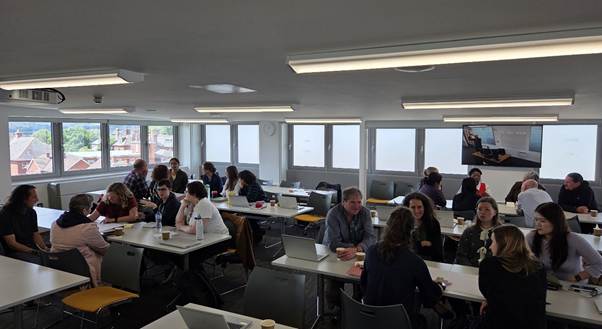
Workshop discussions identified several pressing priorities, including geographical isolation, poor transport links, digital exclusion, housing challenges, loneliness, mental health problems and the needs of ageing populations. Participants also reflected on the importance of recognising the diversity of rural communities and avoiding a one-size-fits-all approach to policy and service design.
A particularly strong theme was the need for a more coordinated rural voice. While rural areas differ in many ways, participants agreed that influencing national policy requires shared priorities and clear communication. There was enthusiasm for developing stronger partnerships across academia, healthcare, local government and the voluntary sector, alongside exploring the potential for a shared rural health strategy.
One phrase resonated throughout the day: “What about rural?” Participants argued that this question should be routinely asked whenever new policies, services or innovations are developed. Too often, rural communities are overlooked, despite facing unique challenges that can affect health and wellbeing.
Concluding remarks
The event concluded with a discussion about the future of the RARE network. Although still in its early stages, there was a clear sense of momentum and optimism. For me, the day reinforced the value of interdisciplinary collaboration and the importance of ensuring that rural communities have a stronger voice in research, policy and practice. With growing national interest in rural health, now feels like the right time to build connections, develop evidence and work together to address longstanding inequalities.
Contact
If you’re interested in the activities of the RARE network you can contact on RARE-research-network@exeter.ac.uk

